Sketch a few clear streets.
Draw a simple front view and mark where each plant group begins and ends. Give each group enough space to read as one shape rather than a scattering of individual stems.
A Dutch-inspired tank puts the garden in the foreground. Use this guide to turn color and texture into a planting plan you can read from the front glass and care for over time.
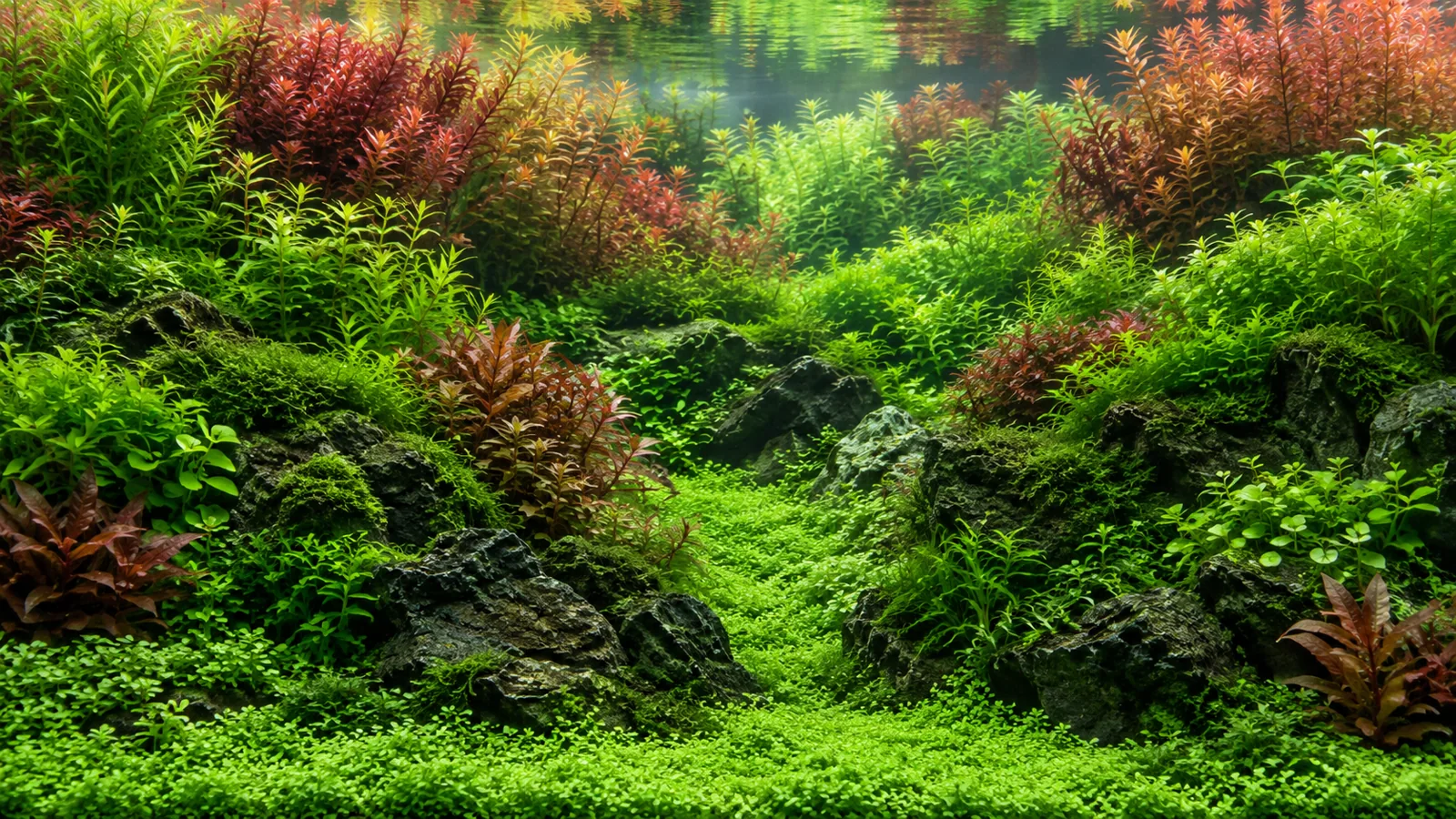
Moon Tank concept image, for visual inspiration only. See Hakkai's Dutch-style article for the team's real-world perspective.
Masterscaper describes Dutch “streets”: groups of one plant type arranged so neighboring groups contrast in height, leaf shape, or color. Hakkai emphasizes variety and attentive placement. Their guides differ on the role of hardscape, so this field note concentrates on their shared idea: make the plants the composition.
Draw a simple front view and mark where each plant group begins and ends. Give each group enough space to read as one shape rather than a scattering of individual stems.
Place a fine texture beside a broader leaf, or a warm color beside green. Check the silhouette from the front; contrast works best when each group still feels connected to the whole garden.
Repeat a plant or color so the eye can follow the pattern. A new type in every gap can make the layout harder to read. Revise the sketch before buying or planting.
Imagine the groups after they grow. Leave access to shape them and plan the care you can actually provide. The Moon Mission palette is a visual prompt, not a plant selection or maintenance prescription.
Choose real plants for your aquarium's conditions, then follow the team's setup guidance for the equipment, water, and maintenance. The builder's visual crew is never a stocking recommendation.
Use the real-tank field guide and Pet Zone SD's setup and cycling guide. Research each species for your actual aquarium before considering livestock.