Choose the lead stone.
Pick one stone whose silhouette catches your eye. Try it slightly off center, then step back. It should give the whole arrangement a direction before you add anything else.
An Iwagumi layout asks a few stones and a little open space to carry the whole scene. Use this guide to turn that quiet idea into a layout you can plan and refine.
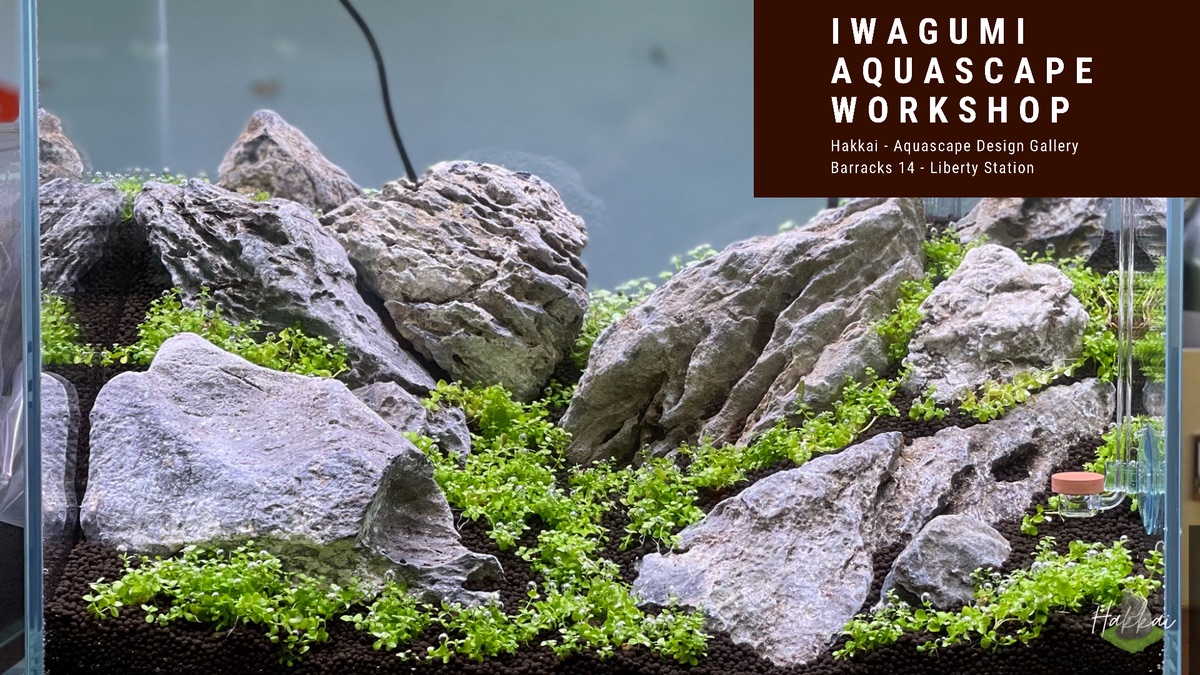
Iwagumi workshop image: Hakkai. The Moon Tank scene is a concept preview; this is a real photographed layout.
Classic Iwagumi often uses a small, odd-numbered group of stones with one dominant piece. Masterscaper describes that hierarchy in detail. These four decisions turn the idea into a layout you can actually judge from the front glass.
Pick one stone whose silhouette catches your eye. Try it slightly off center, then step back. It should give the whole arrangement a direction before you add anything else.
Use smaller stones to repeat an angle or texture without competing for attention. Change their height and spacing until the group feels related, rather than evenly lined up.
Do not fill every gap. The clear area around the stones is part of the composition. Look at your layout from the front and from the angle where you will usually enjoy the tank.
A restrained, low planting can frame the hardscape. Choose real plants for your tank's conditions and the care you can provide; the Moon Mission color palette is only visual inspiration.
Arrange and photograph the hardscape while you can still move it easily. Then plan the equipment, plants, water preparation, and maintenance for the real aquarium. A visual crew in the builder is never a stocking recommendation.
Follow the real-tank field guide and Pet Zone SD's setup and cycling guide before considering animals. Research each species for your actual aquarium.